Key takeaways
- Sodium metabisulfite is a dry, stable source of sulfur dioxide. The specification sheet read for this note puts its sulfur dioxide content at 66.4 to 67.2 %, so roughly two thirds of what you weigh out is active SO₂.
- It preserves wine and cider, keeps dried fruit, cherries and syrups from browning, and controls spoilage in brines. It may not be used in meats, in foods that are a source of vitamin B₁, or on fruit and vegetables sold or served raw.
- Sulfites have their own US labeling rule: added for an effect they are always declared, and a finished food with 10 ppm or more must declare them even when they came in with another ingredient.
A powder that delivers a gas
Sodium metabisulfite is a white crystalline salt that releases sulfur dioxide when it dissolves in an acidic solution. Winemakers, fruit processors and brine makers use it because it is far easier to weigh, store and ship than the gas itself. The supplier sheet read for this note specifies 98.6 to 99.8 % sodium metabisulfite and 66.4 to 67.2 % sulfur dioxide, which is the number that matters for dosing.
In the United States the salt is generally recognized as safe under 21 CFR 182.3766, with three exclusions: it may not be used in meats, in foods recognized as a source of vitamin B₁, or on fruits and vegetables served or sold raw or presented as fresh. The list of permitted uses therefore starts after the meat case and the raw-produce aisle.
Two jobs in one ingredient
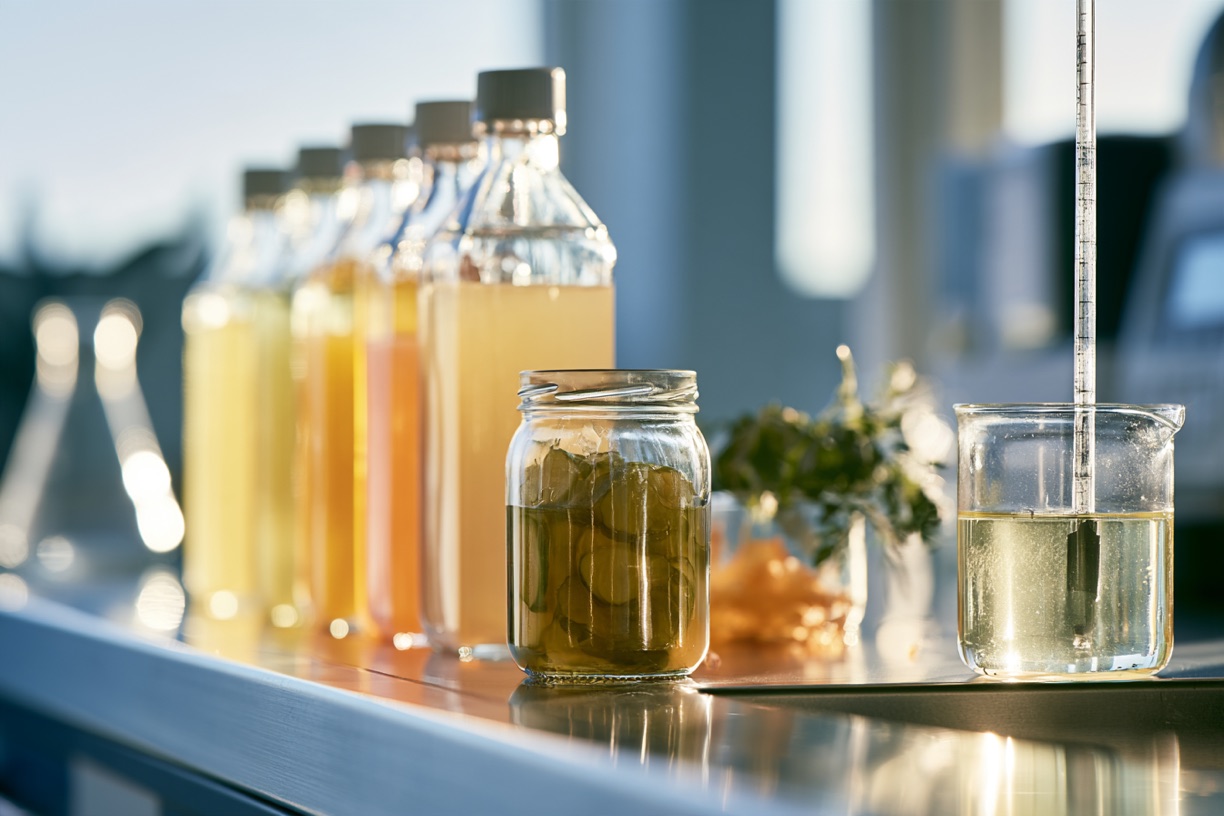
Sulfur dioxide is antimicrobial. In wine and cider it keeps wild yeasts and bacteria in check between fermentation and bottling; in brines it adds a hurdle alongside salt and acid.
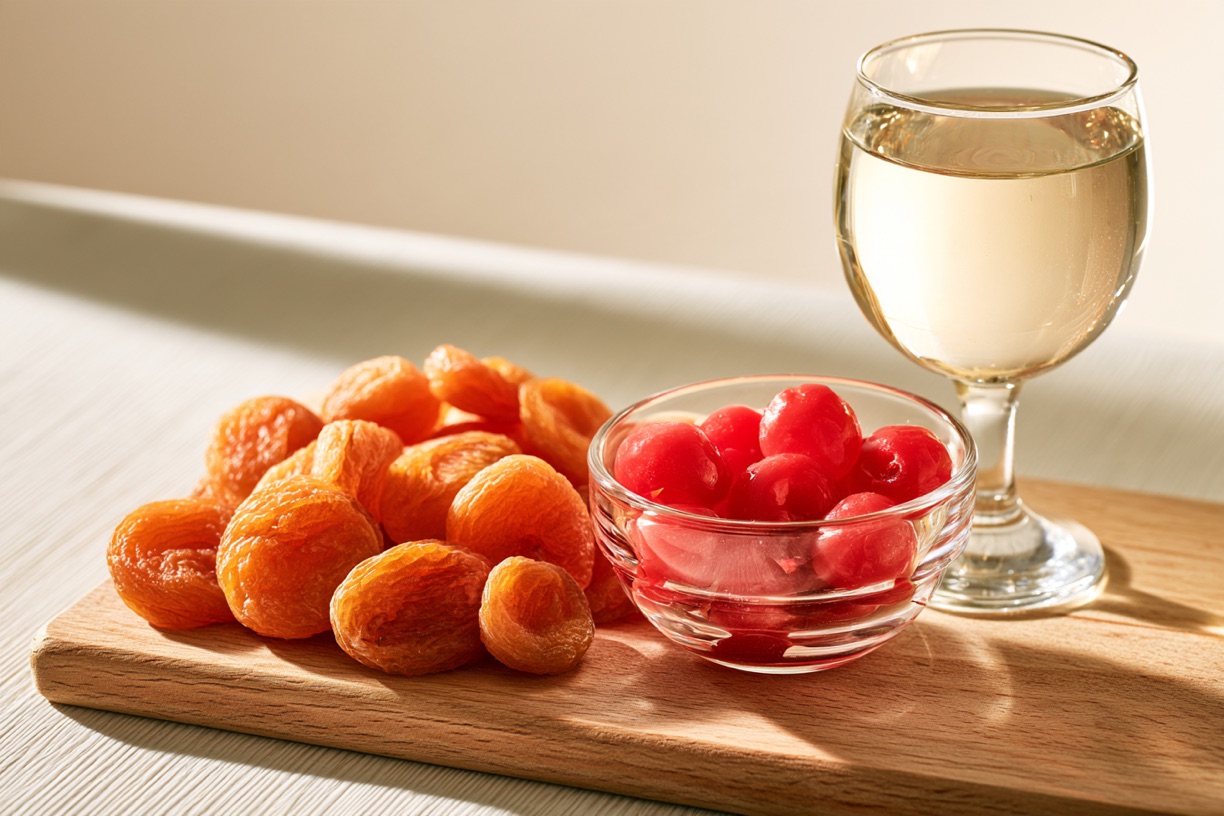
It is also an antioxidant and anti-browning agent. Cut or dried fruit browns because enzymes and oxygen act on the fruit; sulfite blocks both, which is why light-colored dried apricots, apples and maraschino cherries depend on it. In cherry processing a sulfite brine does a third job as well: it bleaches the fruit before it is colored and sweetened.
Dosing as sulfur dioxide
The dose is always thought of as sulfur dioxide, not as metabisulfite. Multiply the metabisulfite weight by its sulfur dioxide content, about 0.67, to get the SO₂ added. Only part of that stays free and active; the rest binds to sugars and other components, and the share that is molecular and protective rises as pH falls. A wine at low pH needs less total SO₂ for the same protection than a wine at higher pH.
Regulatory ceilings apply in each product category, and wine in particular has a federal maximum of 350 ppm total sulfur dioxide. Set the dose to the product, measure free and total SO₂, and keep the records.
| Product | What the sulfite does | What to watch |
|---|---|---|
| Wine and cider | Controls wild yeast and bacteria; protects against oxidation | Free and total SO₂; the federal maximum; label declaration |
| Maraschino and glacé cherries | Bleaches and firms the fruit in brine; prevents browning | Residual SO₂ in the finished fruit; label declaration |
| Dried fruit | Prevents browning and spoilage | Residual level; label declaration |
| Fruit syrups and toppings | Prevents browning; adds a hurdle | pH; combination with sorbate or benzoate |
| Pickles and brines | Antimicrobial hurdle | Permitted use in the category; label declaration |
Working alongside other preservatives
Sulfite is usually one of several hurdles. In fruit syrups and toppings it is paired with sorbate or benzoate: the sulfite does the anti-browning work and the sorbate or benzoate carries the microbial load at the product’s pH. In wine, potassium sorbate is sometimes added at bottling to stop sweet wines from re-fermenting, and it only does that job reliably alongside an adequate level of free sulfur dioxide; without the sulfite, bacteria can turn the sorbate into a geranium-like off-odor.
Measuring is part of using it. Free and total sulfur dioxide are determined by standard wet-chemistry methods or by test kits, and a plant that uses sulfite should have one of them on hand rather than dosing blind.
The labeling rule
Sulfites can cause reactions in sensitive people, and US labeling rules treat them accordingly: sulfite added for its effect is declared like any other ingredient, and sulfite carried in with an ingredient must be declared once the finished food contains 10 parts per million or more. A dried-fruit filling, a syrup or a cherry topping that uses metabisulfite will almost always cross that line, so the declaration should be planned from the start.
Carry-over matters too. If a fruit preparation made with sulfite goes into a yogurt or a bakery filling, the finished product may need the declaration even though no sulfite was added at that plant.
Handling in the plant
- Store sealed and dry. The salt slowly loses sulfur dioxide to moist air, and the assay drops.
- Dissolve in cool water and add to the acidic product; do not add dry to a hot acidic batch, which releases gas quickly.
- Ventilate where it is weighed and dissolved; sulfur dioxide is an irritant.
- Keep the sulfite line separate from products that are labeled sulfite-free.
- Record the SO₂ added per batch and the measured residual where the category requires it.
Frequently asked questions
- Is sodium metabisulfite the same as potassium metabisulfite?
- They do the same job and deliver sulfur dioxide the same way. Winemakers often prefer the potassium salt to avoid adding sodium; food processors more often use the sodium salt. Dose both by SO₂ content.
- Can I use it to keep fresh-cut apples from browning?
- No. Sulfites are not permitted on fruits and vegetables intended to be eaten raw. Ascorbic acid and citric acid are the usual alternatives there.
- Does cooking remove the sulfite?
- Some sulfur dioxide is driven off by heat. If the sulfite still does a job in the finished food, it is declared. If it does not, the measured level decides: 10 ppm or more in the finished food must be declared. Measure, then label.