Key takeaways
- Only the undissociated acid form of sorbate is strongly antimicrobial. Sorbic acid has a pKa of about 4.76, so the pH of the finished product sets how much of your dose is in that form.
- Sorbate works best below about pH 6 and gets much stronger as pH drops. At pH 4 about 85 % of it is active; at pH 6 about 5 %.
- Near-neutral products need an acidulant before a sorbate will do much. Sorbate is one hurdle alongside pH, water activity, hygiene, packaging and temperature.
One molecule, two states
In a food, sorbate exists in two states: the undissociated acid (sorbic acid with its hydrogen attached) and the dissociated sorbate ion. Only the undissociated acid form is strongly antimicrobial. The ion contributes little.
Which state dominates is set by pH. The balance point is the pKa of sorbic acid, about 4.76. At that pH half the sorbate is in the acid form and half is dissociated. Below it, the acid form takes over. Above it, the ion does.
This is why the same dose can protect one product for weeks and do almost nothing in another. The sorbate did not change. The share of it doing the work did.
The numbers
The relationship follows a standard formula: the share of sorbate in the acid form equals 1 divided by (1 + 10 to the power of pH minus pKa). With a pKa of 4.76 it gives the table below.
| pH of the finished product | Share of sorbate in the active (acid) form |
|---|---|
| 3.0 | ≈ 98 % |
| 4.0 | ≈ 85 % |
| 4.76 (pKa) | 50 % |
| 5.0 | ≈ 37 % |
| 5.5 | ≈ 15 % |
| 6.0 | ≈ 5 % |
| 6.5 | ≈ 2 % |
| 7.0 | ≈ 0.6 % |
Calculated from a pKa of 4.76. Values are rounded.
Read it as a steep slope rather than a cut-off. Between pH 4 and pH 5.5 the active share falls from about 85 % to about 15 %: at the same dose, the product at pH 5.5 has roughly one sixth of the working preservative. By pH 6.5 only about 2 % remains active, and at pH 7 the figure is below 1 %.
What this means on the line
Three rules follow.
- Sorbate works best below about pH 6 and gets much stronger as pH drops. If your product sits comfortably below pH 5, you are in the range where the preservative earns its keep.
- Near-neutral foods need an acidulant. If the finished product is near pH 6 or above, adding more sorbate buys very little. Lowering the pH does far more.
- Measure the finished product, not an ingredient. The pH that matters is the one the preservative sees after mixing, cooking, cooling and any later adjustment.
The last rule is the one most often missed. A brine, a filling or a dough can look acidic on paper and finish at a higher pH once every ingredient is in. Measure what leaves the line, and measure it again at the end of shelf life if the product changes over time.
A worked example makes the slope concrete. Suppose a product is dosed at 0.1 % sorbate. At pH 4 about 0.085 % of the product is active preservative. At pH 5.5 it is about 0.015 %, and at pH 6 about 0.005 %. The label reads the same in all three cases. The product does not behave the same.
Choosing an acidulant
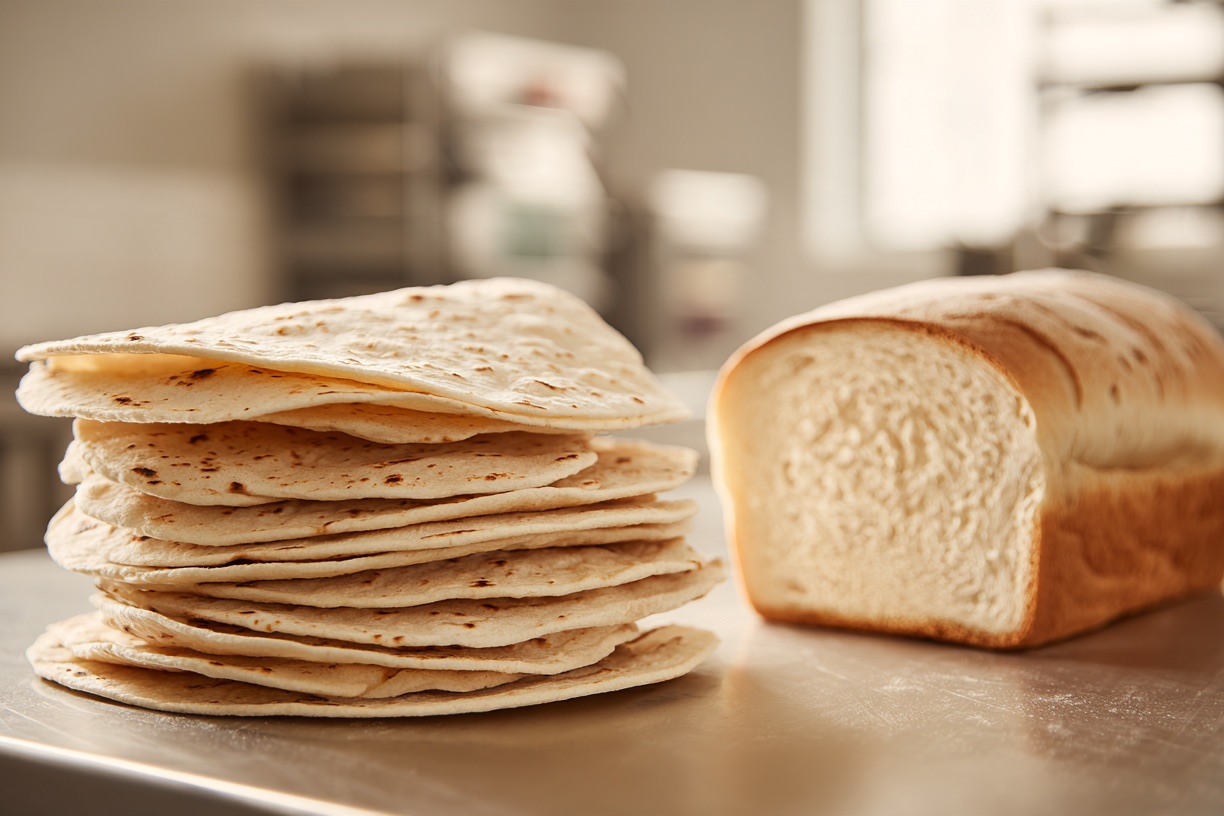
Which acidulant fits depends on the product: its flavour, its texture, its process and the regulations that apply to it. Tortilla makers, for example, commonly use fumaric acid. Whatever the choice, the acidulant and the preservative should be treated as one system and specified together, because a change to one changes what the other can do.
The order of work matters. Lower the pH first, confirm it on the finished product, and only then decide whether the sorbate dose needs to move. Raising the dose in a product that is still near neutral spends money on preservative that is mostly not working.
Sorbate is one hurdle, not the whole fence
A preservative is one of several hurdles that together keep a product from spoiling. Sorbate acts mainly against mold and yeast and is much weaker against bacteria, so it is never the only defence.
- pH: sets how much of the sorbate is active, and is a hurdle in its own right.
- Water activity: how much water is available to microorganisms.
- Hygiene: the microbial load the product starts with.
- Packaging: what can reach the product after it is sealed.
- Temperature: how fast anything that survives can grow.
When a product spoils despite a correct sorbate dose, the answer is usually in one of these, and most often in pH.
A short checklist for QA
- Record the pH of the finished product on every batch, at the point where the preservative has to work.
- Compare it with the table: below about pH 5 most of the dose is working; around pH 6, little of it is.
- If the pH is too high, work with an acidulant before raising the dose.
- When pH, dose or recipe changes, repeat the shelf-life test.
- Keep the other hurdles in view: water activity, hygiene, packaging and storage temperature.
Frequently asked questions
- My product is at pH 6.5. Will sorbate help?
- Only about 2 % of it will be in the active form, so very little. Lowering the pH with an acidulant, if the product allows it, changes that picture more than any increase in dose.
- Does lowering pH mean I can use less sorbate?
- It means more of what you use is working. Whether you can reduce the dose depends on the product and must be shown by a shelf-life test, within the limits that apply to your product.
- Does this apply to potassium sorbate as well as sorbic acid?
- Yes. In the food both forms act as sorbic acid, so the same pKa and the same table apply to both.